%20v%202%20white%20bkgd.png)
Misdemeanor vs. Felony in Connecticut: What You Need to Know
Q & A With Attorney Gregg Wagman
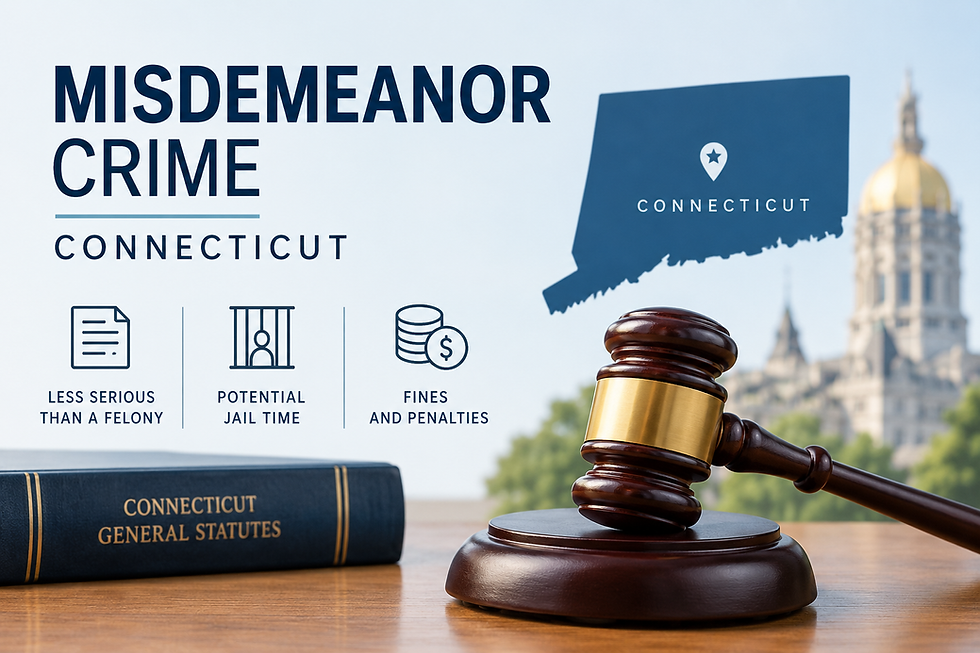
If you or someone you care about has been arrested in Connecticut, you may hear the terms misdemeanor and felony used to describe the charges. But what is the difference between a misdemeanor and a felony in Connecticut?
The distinction is important. The classification of a criminal offense can affect potential jail or prison time, fines, probation, your criminal record, and consequences that may continue long after a case is resolved.
Whether you are facing charges in New London, Norwich, Groton, Waterford, Mystic, or elsewhere in Connecticut, understanding the classification of the offense is an important first step.
What Is a Misdemeanor in Connecticut?
A misdemeanor is generally a criminal offense for which Connecticut law authorizes a maximum sentence of 364 days or less of imprisonment. Connecticut divides misdemeanors into several classifications, including Class A, Class B, Class C, and Class D misdemeanors.
The classification affects the maximum potential sentence. Under Connecticut law, the maximum incarceration periods generally range from up to 364 days for a Class A misdemeanor to up to 30 days for a Class D misdemeanor. Maximum fines also vary according to the classification.
A misdemeanor charge does not necessarily mean that someone will serve time in jail. Depending on the offense and circumstances, a case may result in a variety of outcomes, including dismissal, diversion, probation, a conditional discharge, a fine, or incarceration.
It is also important to remember that being charged with a misdemeanor is not the same as being convicted.
What Is a Felony in Connecticut?
A felony is a more serious criminal offense that can carry a potential sentence of more than one year of imprisonment.
Connecticut generally classifies felonies as Class A, Class B, Class C, Class D, and Class E felonies. The potential penalties increase depending on the classification and the specific offense involved.
For example, Connecticut's statutory ranges generally provide for:
Class A felony: 10 to 25 years for a general Class A felony, with certain offenses carrying different penalties
Class B felony: 1 to 20 years
Class C felony: 1 to 10 years
Class D felony: Up to 5 years
Class E felony: Up to 3 years
Certain crimes have mandatory minimum sentences or enhanced penalties based on the circumstances of the offense or a defendant's prior criminal history.
Because sentencing laws can be complicated, the classification alone does not tell you exactly what sentence someone will receive.
Misdemeanor vs. Felony: Why Does the Difference Matter?
The difference between a misdemeanor and felony extends beyond the potential sentence.
A felony conviction can have significant long-term consequences. Depending on the circumstances, a criminal conviction may affect employment opportunities, professional licensing, housing, education, immigration matters, and other aspects of someone's life.
A misdemeanor conviction can also create problems. It should not automatically be considered a minor legal issue simply because it is classified below a felony.
The consequences depend on the particular offense, the outcome of the case, the person's criminal history, and other individual circumstances.
Can a Misdemeanor or Felony Become Part of Your Criminal Record?
Yes. A conviction for either type of offense can become part of a person's criminal history.
However, there is an important distinction between an arrest, a criminal charge, and a conviction. An arrest or charge does not mean that a person has been found guilty.
A criminal case can end in several different ways. Depending on the circumstances, the outcome may include dismissal, acquittal, a diversionary program, a negotiated resolution, or conviction.
Connecticut law also provides mechanisms that may allow certain criminal records to be erased when specific legal requirements are met. Whether someone qualifies depends on factors such as the offense, case outcome, and applicable waiting periods.
Can a Felony Affect Your Future?
Potentially, yes.
A felony conviction may create additional obstacles when applying for certain jobs or professional licenses. Some employers and licensing agencies conduct criminal background checks, and particular convictions may be relevant to eligibility or employment decisions.
A conviction can also have consequences in other areas, including housing, education, and immigration.
These consequences are not identical for every person. The specific offense and individual circumstances matter, which is why someone facing a felony charge should understand both the immediate legal consequences and the potential long-term effects.
What Should You Do If You Are Facing Criminal Charges in Connecticut?
If you have been arrested or charged with a crime, start by finding out exactly what offense has been charged and how Connecticut law classifies it.
Do not assume that a misdemeanor will automatically result in a minor penalty, or that a felony charge automatically means you will be sentenced to prison. The facts of the case, available evidence, prior criminal history, and applicable statutes can all affect what happens next.
An experienced Connecticut criminal defense attorney can review the circumstances of your case and explain the potential consequences and legal options available to you.
Connecticut Criminal Defense in New London County
Attorney Gregg Wagman has practiced law in Connecticut since 1995 and has experience handling criminal defense matters. His office is located in New London, Connecticut, and he is admitted to practice in all Connecticut state courts.
If you are facing a misdemeanor or felony charge in New London County or elsewhere in Connecticut, understanding your rights and your options is an important part of navigating the criminal justice system.
Contact Attorney Gregg Wagman to discuss your situation and learn more about your legal options.
This article is for general informational purposes only and does not constitute legal advice. Connecticut criminal laws and sentencing provisions can change. The potential consequences of a criminal charge depend on the specific facts, applicable statutes, criminal history, and other circumstances of each individual case.

Comments